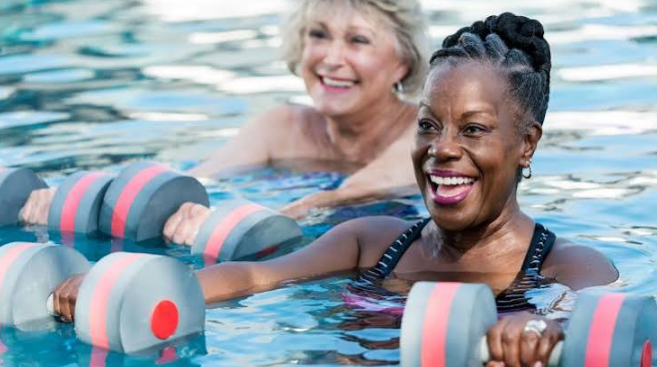
Exercise in water has a reputation for being easy, and that reputation is misleading. Anyone who has tried a vigorous water workout knows that it can leave you breathless and pleasantly tired, just like a good session on land. The difference is that water supports your body weight, cushions your joints and provides resistance in every direction. That combination makes water-based exercise one of the most accessible and adaptable forms of fitness available. Interest in water-based exercise has grown steadily as more people discover that a pool can be a serious training space, not just a place to swim laps.
Why Water Works So Well for Exercise
Water is around eight hundred times denser than air, which means that every movement you make in a pool meets resistance. You do not need weights or machines to create that resistance: the water itself provides it. Push your arms through the water and your shoulders and back work hard. March in place and your hips and legs have to push against the drag. The resistance is also smooth and even, without the jarring impact of running on hard ground. That makes water an excellent medium for people who want a challenging workout without pounding their knees, hips and ankles.
Buoyancy is the other half of the story. When you stand chest-deep in water, much of your body weight is supported, which reduces the load on your joints. This is why water exercise is often recommended for people with arthritis, back problems or recovering injuries. Movements that would be painful or impossible on land can feel comfortable and natural in the pool. At the same time, the support of the water lets people move more freely and with greater confidence, which encourages them to exercise longer and more often.
See also: Understanding the Features That Matter in Everyday Appliances
Strength, Cardio and Flexibility in One Session
A well-designed water session can train several aspects of fitness at once. Aerobic fitness improves through continuous movement such as water walking, jogging in place or dance-style routines set to music. Because the water resists every movement, your heart and lungs work harder than they would during a gentle stroll, even though the exercise feels comfortable. Over time, this builds stamina that carries over into everyday activities such as climbing stairs or walking uphill.
Strength develops through the resistance of the water and through simple equipment such as foam dumbbells and resistance gloves. These tools increase the surface area pushing against the water, which makes each movement harder. Flexibility improves too, because the warmth and support of the water allow muscles to relax and joints to move through a fuller range. Many people find they can stretch more comfortably in the pool than on land, which helps with posture and mobility over time.
Who Benefits Most from Water-Based Exercise
Water exercise is often associated with older adults, and it is true that many people take it up later in life. A local leisure centre is often where people first try aqua fitness joining a class on a friend’s suggestion and staying for the friendly atmosphere. The low impact and joint-friendly nature of the pool make it ideal for staying active as the body changes with age. Regular sessions help maintain muscle strength, balance and mobility, all of which support independence and reduce the risk of falls. The social side matters too: group sessions in the pool are friendly and welcoming, and many participants value the companionship as much as the exercise.
But water-based exercise is not only for one age group. Athletes use pool sessions to recover from hard training, because the water lets them move and flush out tired muscles without additional impact. People returning to exercise after an injury or a long break appreciate being able to work hard without fear of jarring their joints.
Getting Started and Staying Safe
Starting is straightforward: you need swimwear, a towel and a pool that runs group sessions or offers space for individual exercise. You do not need to be a strong swimmer, since most water exercise takes place in the shallow end with your feet on the floor. If you cannot swim at all, let the instructor know and stay where you can stand comfortably. A swimming aid or a flotation belt can add confidence, and many pools provide these.
As with any exercise, listen to your body. Drink water before and after the session, even though you may not feel thirsty in the pool. If you feel dizzy, unwell or unusually short of breath, stop and rest. People with medical conditions such as heart problems, epilepsy or uncontrolled blood pressure should speak to a doctor before starting a new exercise programme. With those sensible precautions, water-based exercise is one of the safest and most enjoyable ways to stay fit.
Frequently Asked Questions
1. Do I need to know how to swim to take part in water exercise?
No, not for most group sessions. The exercises usually take place in the shallow end, where you can stand on the pool floor. Tell the instructor if you are not a confident swimmer, and they will help you stay in a comfortable depth and suggest suitable modifications.
2. Is water exercise effective for losing weight?
It can be part of an effective weight-management plan. Water workouts burn calories, build muscle and improve fitness, all of which support healthy weight. As with any exercise, results depend on consistency, intensity and overall lifestyle, including diet and sleep.
3. What should I bring to my first water exercise session?
Bring swimwear, a towel, a water bottle and any personal items such as a swimming cap if the pool requires one. Arrive a little early so you can meet the instructor, explain your experience level and ask about the depth of the pool.
Conclusion
Water-based exercise offers a rare combination: it is challenging enough to build real fitness, yet gentle enough for joints and accessible to almost everyone. It trains strength, stamina and flexibility in a single session, and it does so in an environment that many people find enjoyable and relaxing. Whether you are recovering from an injury, looking for a low-impact routine, or simply searching for a fresh way to stay active, the pool deserves a place in your plans. Start with a beginner session, listen to your body, and discover for yourself how rewarding exercise in water can be.